Slip Disc and Sciatica: When Is Surgery Needed? A Guide from a Spine Surgeon in Thane
Many people live with back pain for months, assuming it will go away on its own. Often it does. But when the pain travels down the leg, or comes with tingling and weakness, the cause may be a slip disc (disc prolapse) pressing on a nerve. Knowing when to wait, when to treat without surgery, and when to see a spine surgeon in Thane can protect you from long-term nerve damage.
What Is a Slip Disc?
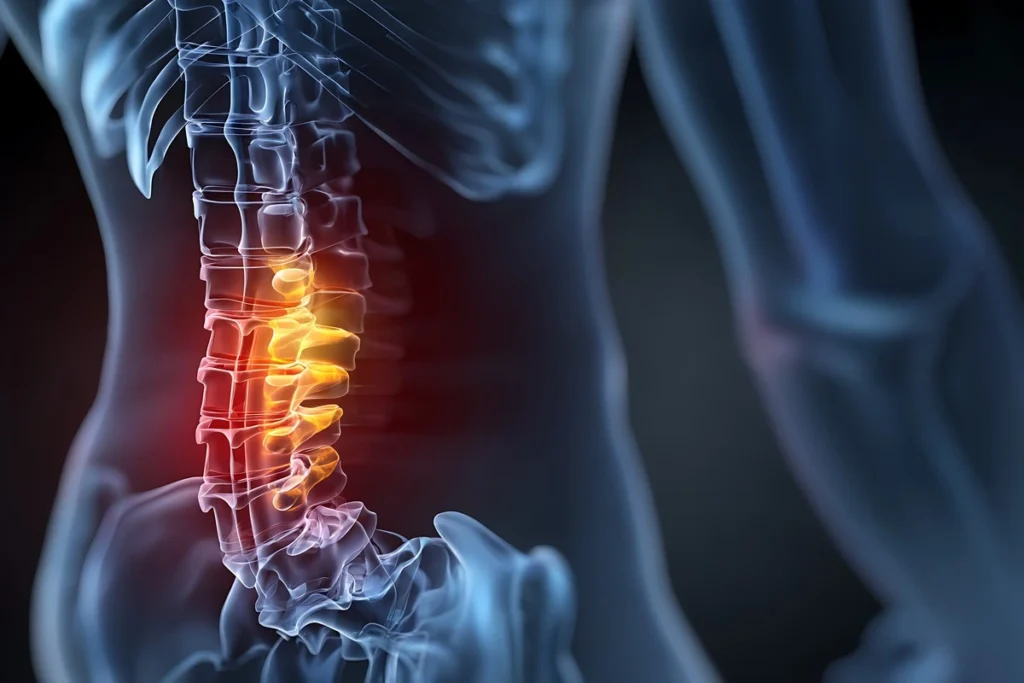
Between each pair of vertebrae in your spine sits a soft cushion called an intervertebral disc. A disc has a tough outer ring and a jelly-like centre. With age, injury or repeated strain, the outer ring can weaken, and the inner material can bulge or push out. This is called disc prolapse, or “slip disc”.
A slip disc does not actually slip. When the prolapsed disc presses on a nearby nerve root, it causes pain and other symptoms along the path of that nerve.
What Is Sciatica?
Sciatica is pain that starts in the lower back or buttock and runs down the back of the thigh and leg, sometimes up to the foot. It is a symptom, not a disease, and a lumbar (lower back) disc prolapse is one of its most common causes.
Symptoms to Watch For
Lower back (lumbar) disc
- Back pain that shoots down one leg
- Pain that worsens on sitting, bending, coughing or sneezing
- Numbness or tingling in the leg or foot
- Weakness in the foot or leg, or difficulty lifting the toes
Neck (cervical) disc
- Neck pain spreading to the shoulder, arm or hand
- Tingling or numbness in the fingers
- Weak grip or difficulty with fine hand tasks
- In more serious cases, unsteady walking
Common Causes and Risk Factors
- Age-related wear of the discs
- Long hours of sitting, poor posture or a desk-bound job
- Lifting heavy weights with a bent back
- Obesity and a sedentary lifestyle
- Smoking
- Falls, bike accidents and other injuries
How Is It Diagnosed?
A careful history and physical examination come first. Your doctor checks your reflexes, muscle strength and sensation. An MRI scan is the main test, as it clearly shows the discs, nerves and spinal cord. X-rays may be used to look at bone alignment and stability.
Treatment Without Surgery
Most patients with a slip disc improve without an operation. First-line treatment may include:
- A short period of relative rest, then gradual return to activity
- Pain-relieving and nerve-calming medicines, as prescribed
- Physiotherapy and targeted exercises
- Posture correction and ergonomic changes at work
- Weight management
- In some cases, image-guided injections near the affected nerve
Improvement often happens over weeks, so a trial of non-surgical treatment is usually the starting point unless there are warning signs.
When Is Surgery Needed?
Your doctor may advise surgery if:
- Severe leg or arm pain continues despite proper treatment for several weeks
- There is progressive weakness, such as foot drop or loss of grip strength
- The MRI shows significant compression of the spinal cord or nerve roots
- Pain makes it hard to walk, sleep or work
Seek emergency care immediately if you have sudden loss of bladder or bowel control, numbness in the groin or inner thighs, or rapidly worsening weakness in both legs. These can signal severe nerve compression that needs urgent attention.
Modern Surgical Options
Surgery for a slip disc has become far less invasive than in the past. Depending on your scan and condition, your surgeon may recommend:
- Endoscopic or minimally invasive discectomy: the prolapsed portion of the disc is removed through a very small incision using a camera and fine instruments. This approach generally means less muscle damage and a shorter hospital stay.
- Microdiscectomy: removal of the disc fragment pressing on the nerve using a microscope.
- Anterior cervical discectomy and fusion (ACDF): for neck discs, the damaged disc is removed and the segment is stabilised with a cage and bone graft.
- Fusion with screws and rods: when the spine is unstable, for example with listhesis or fractures.
The right choice depends on your individual findings. A responsible surgeon explains the options, benefits and risks, and recommends surgery only when it is needed.
Recovery and Prevention
Recovery after spine surgery is a team effort. Typical guidance includes:
- Walking early, as advised by your surgeon
- Following a physiotherapy plan to rebuild core and back strength
- Avoiding heavy lifting and long periods of bending in the early weeks
- Using correct posture while sitting, lifting and sleeping
To lower your risk of future trouble, stay active, strengthen your core, maintain a healthy weight, avoid smoking, and take regular breaks if you sit for long hours.
Frequently Asked Questions
Can a slip disc heal on its own?
Many prolapsed discs shrink over time and symptoms settle with conservative treatment. This is why surgery is not the first step for most people.
Is spine surgery safe?
Every surgery has risks, which your surgeon will discuss with you. Modern techniques, careful planning and good surgical facilities help reduce them.
How soon can I return to work?
It varies with the procedure and your job. Many people with minimally invasive surgery return to light desk work sooner than after open surgery. Your surgeon will give you a personal timeline.
Should I get a second opinion?
Yes. It is reasonable and common to seek another opinion before any major procedure.
Consult a Spine Surgeon in Thane
If you have persistent back or neck pain, pain travelling to an arm or leg, numbness, or weakness, an early evaluation can help you avoid complications.
Dr. Bharat Shinde, NeuroSpine Thane
M.Ch Neurosurgery (NIMHANS, Bangalore), brain and spine surgeon with 10+ years of experience, trained in minimally invasive and endoscopic techniques.
- Neurocare Brain and Spine Clinic: GM House, 2nd Floor, External Bypass Road, Near Lerida Hotel, Opposite Viviana Mall, Thane. Daily 5 pm to 10 pm
- Stellars Superspeciality Hospital: Gokul Nagar, Opposite Jari Mari Mandir, Majiwada, Thane 400601
- Appointments: +91 8451021199 / +91 9082529027
- Website: https://www.neurospinethane.com/