Lumbar Spinal Stenosis: Why Your Legs Give Out When You Walk And What Can Be Done
A Complete Guide to Spinal Canal Narrowing, Neurogenic Claudication, and Modern Decompression Surgery in Thane
By Dr. Bharat Shinde | Best Neurosurgeon in Thane | neurospinethane.com | Stellars Hospital, Thane
Walking 100 Metres and Stopping. Every Day. Until You Can’t Walk at All.
There is a recognisable pattern to lumbar spinal stenosis. It begins with a heaviness in the legs when walking a tiredness that comes on earlier than it used to. Then comes the cramping, the pain radiating down both legs, and the relief that comes only from sitting down or bending forward. The walking distance gets shorter. From a kilometre, to 500 metres, to 100 metres, to the end of the lane.
Many patients attribute this to ‘ageing’ or ‘arthritis.’ Their families accept it as an inevitable consequence of getting older. It is neither inevitable nor untreatable.
Lumbar spinal stenosis is a structural condition with a structural solution. And at NeuroSpine Thane, it is one of the most commonly and successfully treated conditions by Dr. Bharat Shinde.
| 50+
Most Common Age Group Affected |
95%
Patient Satisfaction Post Decompression |
1-2d
Typical Hospital Stay Post Surgery |
What Is Lumbar Spinal Stenosis?
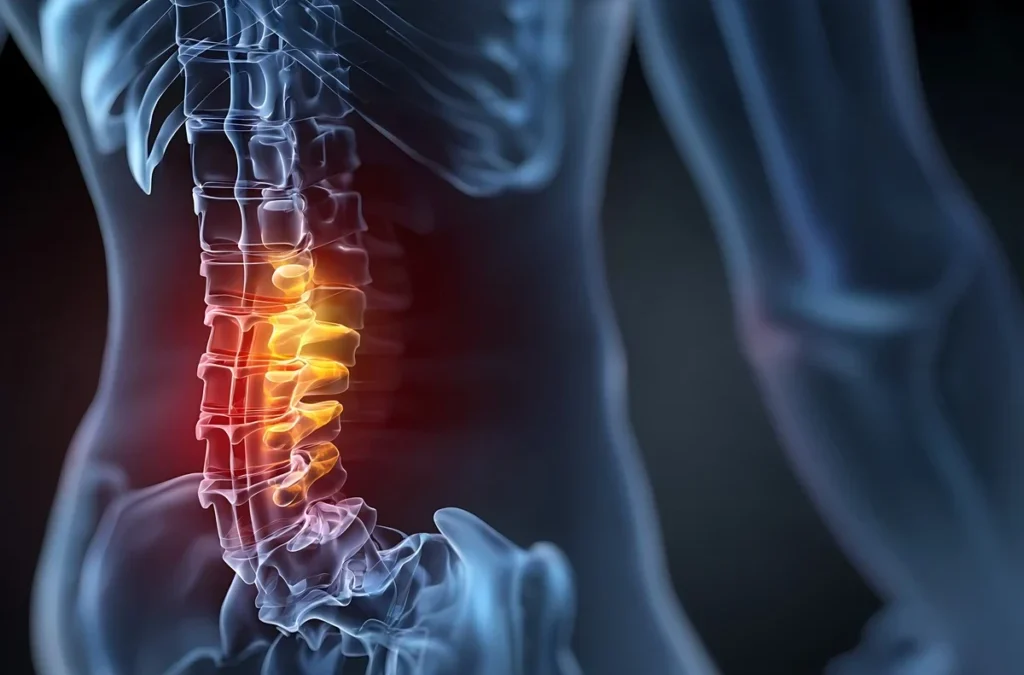
The lumbar spinal canal is the bony channel through which the spinal cord (and below L1, the cauda equina the bundle of nerve roots) passes. Lumbar spinal stenosis is a narrowing of this canal, caused by a combination of:
- Disc degeneration and bulging the disc loses height and bulges into the canal from the front
- Facet joint hypertrophy the joints at the back of the spine enlarge with arthritis, encroaching from behind
- Ligamentum flavum thickening the yellow ligament between vertebral arches thickens and folds inward
- Spondylolisthesis one vertebra slips forward on the one below, further narrowing the canal
The combined effect of these changes which develop over decades progressively narrows the spinal canal. The nerve roots inside become compressed, and their blood supply is impaired, particularly when the spine is extended (standing upright or walking), which is why symptoms are specifically triggered by walking and relieved by sitting or bending forward.
| The Classic Symptom: Neurogenic Claudication
The defining symptom of lumbar spinal stenosis is neurogenic claudication leg pain, heaviness, or cramping that comes on with walking and is relieved by sitting or forward bending (such as leaning on a shopping trolley). This distinguishes it from vascular claudication (peripheral artery disease), where the pain is relieved by simply standing still. If your leg pain during walking is specifically relieved by sitting or bending forward, spinal stenosis is very likely the cause. |
Who Gets Lumbar Spinal Stenosis?
- Adults over 50 the incidence increases significantly with each decade
- Patients with a history of lumbar disc disease or prior disc surgery
- Patients with spondylolisthesis (vertebral slippage)
- Patients with congenitally narrow spinal canals in whom even mild degeneration causes significant stenosis
- Patients with Paget’s disease, acromegaly, or other metabolic bone conditions
- Women more than men particularly after menopause when bone and disc changes accelerate
Diagnosis: MRI and Clinical Correlation
The diagnosis of lumbar spinal stenosis is clinical and radiological. The characteristic history of neurogenic claudication in a patient over 50 is strongly suggestive. MRI of the lumbar spine confirms:
- The degree and level(s) of spinal canal narrowing
- The specific structures causing compression (disc, facet, ligamentum flavum, spondylolisthesis)
- The presence and extent of nerve root compression
- Whether single-level or multilevel stenosis is present which influences the surgical approach
CT myelogram is used in patients who cannot undergo MRI (pacemakers, severe claustrophobia) or when the CT anatomy of the bony structures needs to be assessed in detail for surgical planning.
Treatment: From Conservative to Surgical
Conservative Management: Who It Works For
Patients with mild stenosis and walking limitation of greater than 500 metres may benefit from physiotherapy (core strengthening and flexion-based exercises), activity modification, and pain management. Epidural steroid injections provide temporary relief in some patients. However, conservative management does not change the underlying structural narrowing it manages symptoms only.
When to Consider Surgery
- Walking distance has decreased to less than 200–300 metres from neurogenic claudication
- Leg pain, heaviness, or cramping is significantly affecting daily life, work, or independence
- Conservative management over 3-6 months has not provided adequate relief
- Progressive neurological deficit leg weakness or bladder symptoms makes surgery more urgent
Minimally Invasive Decompression: The Surgical Solution
The goal of surgery for lumbar spinal stenosis is decompression removing the structures (thickened ligament, bone spurs, disc) that are narrowing the canal and compressing the nerve roots. Modern minimally invasive techniques allow this to be achieved through small incisions with rapid recovery.
- [object Object] through a small unilateral incision, the surgeon decompresses the nerve roots on both sides of the canal without removing the spinous process or destabilising the spine. This is the gold standard minimally invasive approach for canal stenosis.
- [object Object] for more severe or multilevel stenosis, a wider decompression may be required. Can be combined with fusion if spondylolisthesis is causing instability.
- [object Object] for stenosis with significant spondylolisthesis, minimally invasive fusion stabilises the segment while decompressing the nerves.
What to Expect After Spinal Decompression Surgery
- Hospital stay: 1-2 days for single-level minimally invasive decompression
- Walking the same day or the following day after surgery
- Significant improvement in walking distance typically within days to weeks
- Return to light daily activities within 1–2 weeks
- Return to work (sedentary) within 2–4 weeks; physically demanding work 6–8 weeks
- Long-term outcomes: approximately 85–90% of appropriately selected patients report significant improvement in walking ability and quality of life
Frequently Asked Questions
| Q: Can spinal stenosis be treated without surgery?
Mild stenosis with minimal walking limitation can often be managed non-surgically with physiotherapy, activity modification, and occasional steroid injections. However, structural stenosis does not resolve spontaneously conservative management controls symptoms, not the underlying narrowing. Surgery is indicated when quality of life is significantly affected and conservative measures have failed. |
| Q: Is spinal stenosis surgery safe for elderly patients?
Yes, in appropriately assessed patients. Age alone is not a contraindication. Minimally invasive decompression is well tolerated in patients in their 70s and 80s, with short operative times, minimal blood loss, and rapid mobilisation. The alternative progressive loss of walking ability and independence carries its own significant health consequences. |
| Q: Will spinal stenosis come back after surgery?
Decompression surgery addresses the current compression at the operated level(s). Adjacent level degeneration can develop over years and may eventually require further treatment. Maintaining core strength and healthy body weight reduces the rate of adjacent level disease. |
| Q: Is spinal stenosis surgery available in Thane?
Yes. Dr. Bharat Shinde at NeuroSpine Thane and Stellars Hospital performs minimally invasive lumbar decompression for spinal stenosis. We treat patients from Thane, Navi Mumbai, Kalyan, and across the MMR. |